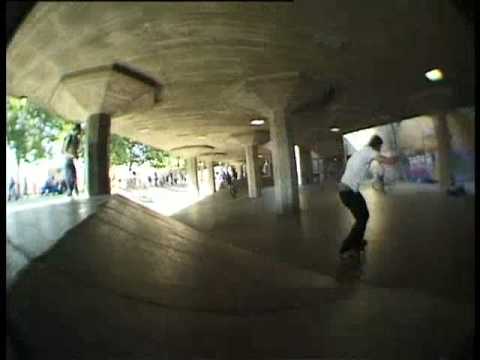
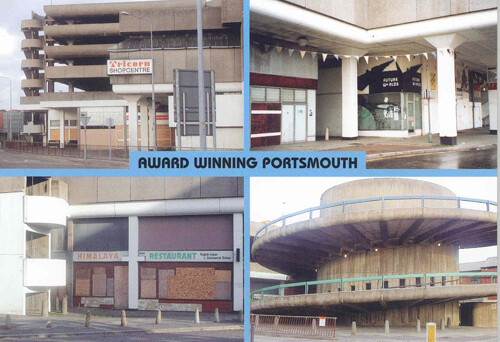
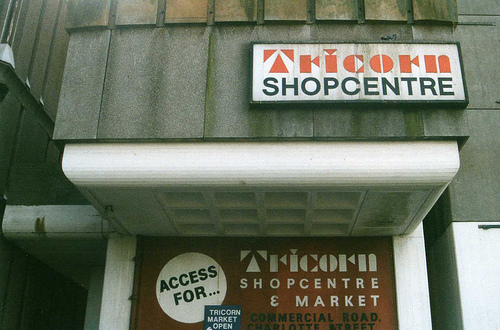
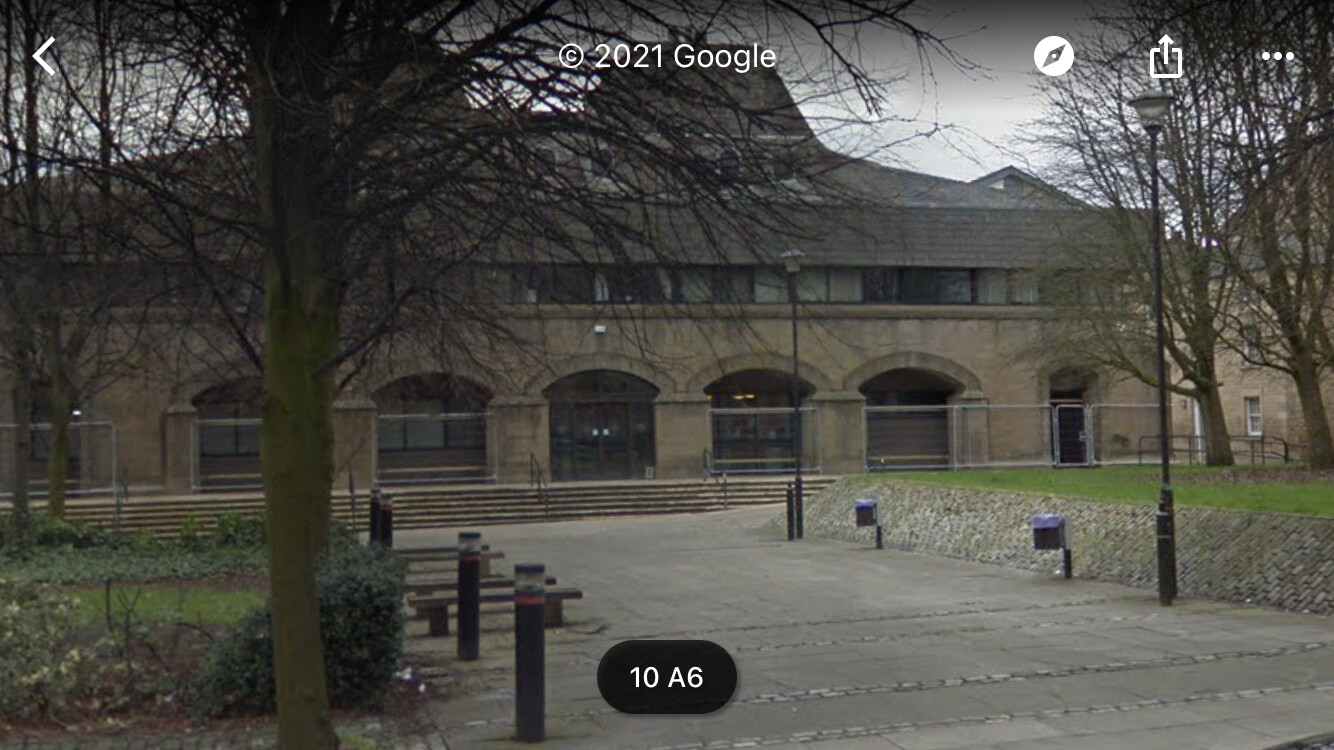
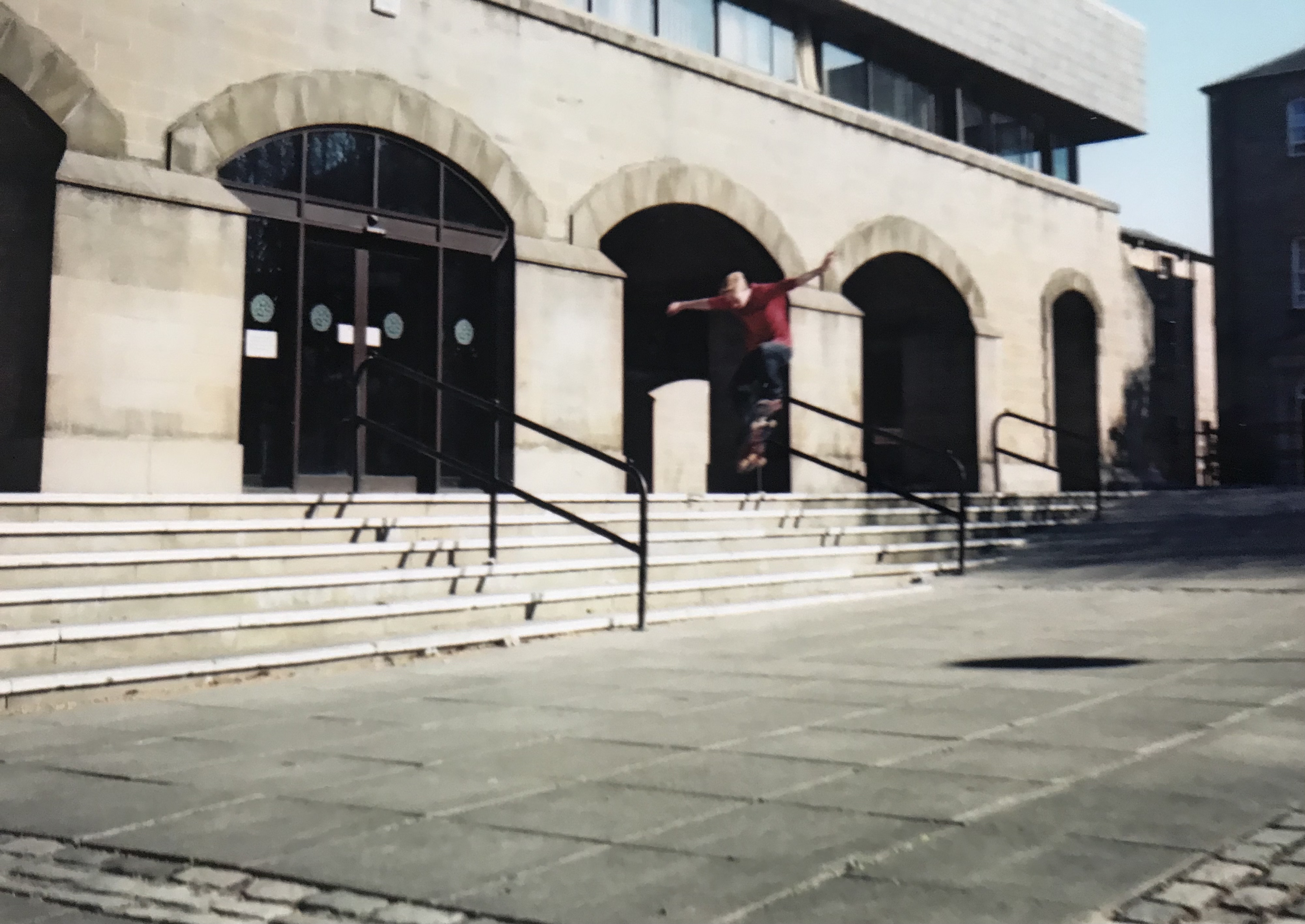
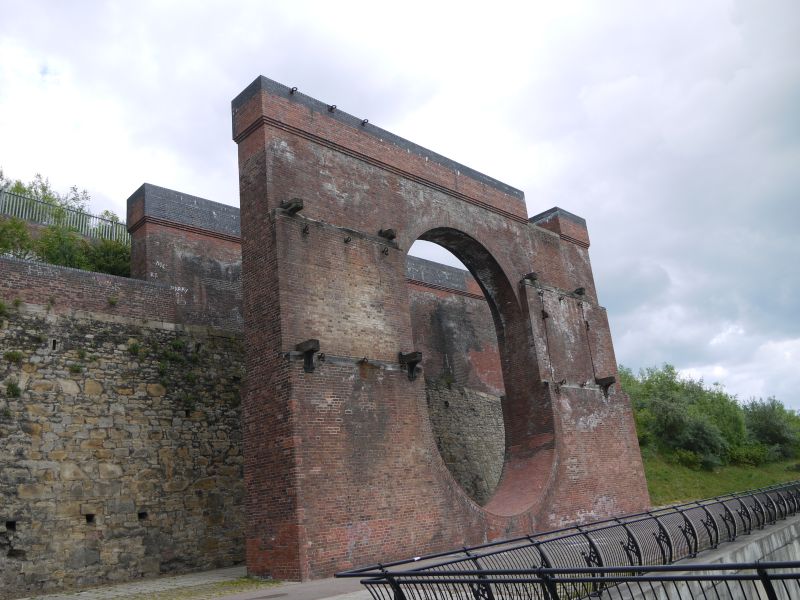
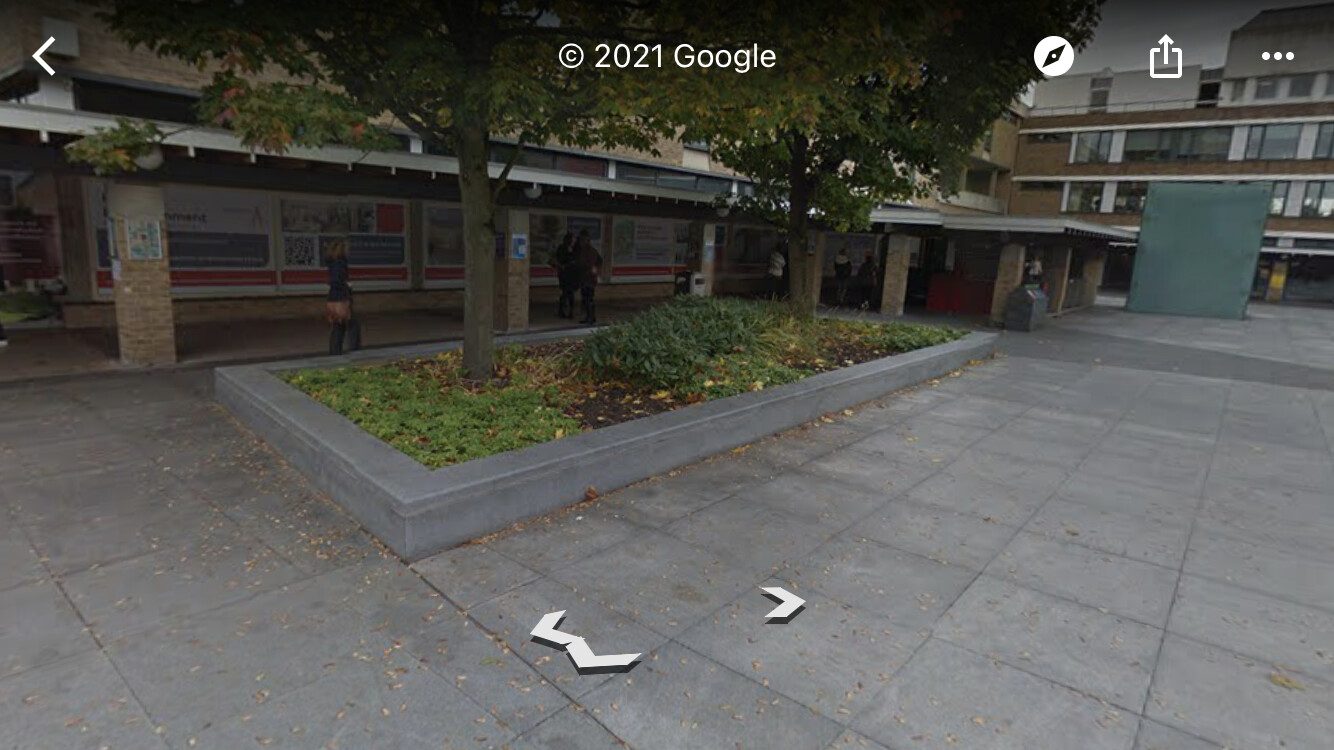
The Guildhall, Tricorn, Law Courts, Navigators Bank area of Portsmouth/ Southsea had an amazing set of skate spots all grouped together. It was a real struggle to get to Southsea Skatepark from the train station because you’d have to stop and session something every few hundred yards.
Even by the early 90’s the Tricorn centre on a damp grey day had begun to feel like something from a city where A Clockwork Orange had collided with Blade Runner - but in a good way.
This is where I grew up skating. Architecturally unimportant, and not really part of that post-war modernist boom, having been built in 1985, but an example I guess of that sort of mundane yet effective council architecture that’s all over the country. The brick banks were cobbled, though the side by the stairs and top were flush enough that you could ride up them. The rails got knobbed the year I started skating there, so about 2002.
Lancaster courts? For all the years I lived there I never skated it, felt it would be pointless without some 60mm filmer wheels. If I remember correctly snowy did the big rail at the back in good shit? Or hit the ledge at the side stairs.
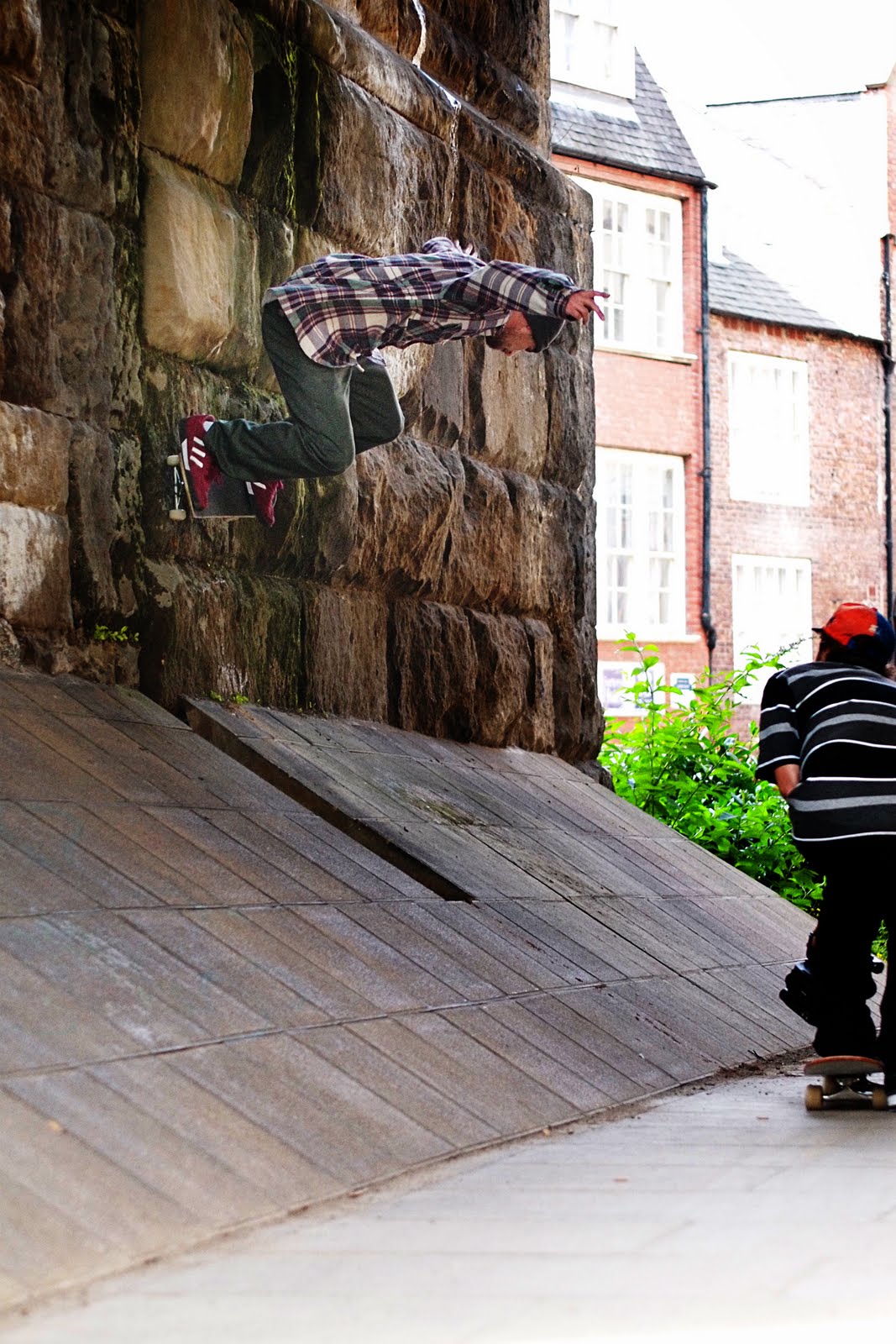
dunno if you’ve been near there lately but they resurfaced a bunch of the slopes on it with tarmac. always thought it’ be sick to pop the rails out as the walls next to a few sets are on a slant so would work alright for a wallride. speaking of sunderland, bunch of rad random spots dotted around though i think the coal staithes up the river still take the crown
Yeah he 5050d the ledge at the back. I did the same trick like 5 years later (CMOAC) and it was such a teenage ego boost haha.
The banks were pretty shit but you could barge up them enough to hit the lip at the top. Hate to think what state they’re in now, haven’t skated there for at least 10 years. When did you live in Lancaster until?
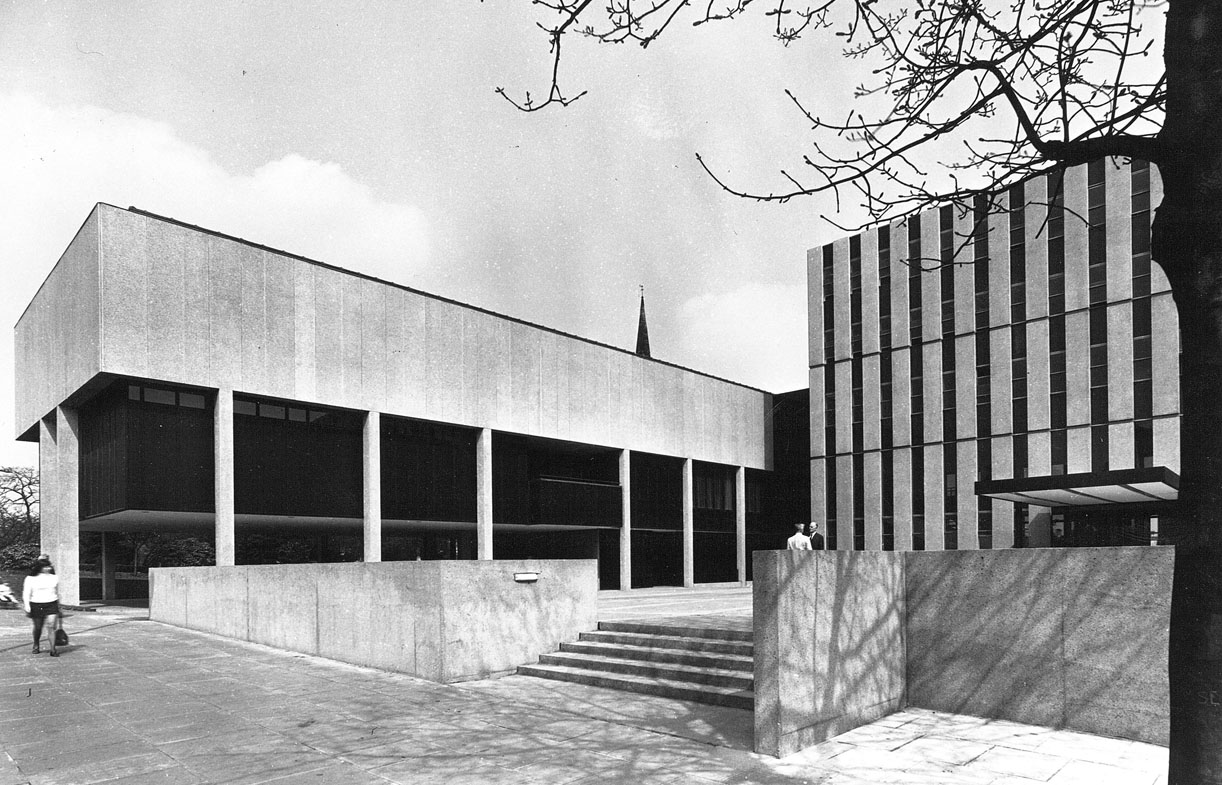
Darlo town hall, the first stairs I ever flipped. I believe Prince Charles once called it the ugliest building in Britain. We used to spend many an evening here. Stairs, rails, blocks and a fly off things that housed the modern art sculpture, good times. It’s been updated slightly now and is utterly shit to skate.
2012 till 2017 didn’t get much skating done in that time tbh. I used to come through often before that from Barra as my missus was an Lancaster Uni which also had loads of brutalist skate spots.
I tried dropping in on this about a third of the way from the top and ate shit.
Yeah the uni has loads of stuff but it always seemed not quite suitable, like stairs with just too low ceilings or ledges in the worst possible places. Like these perfect granite ledges in the busiest possible location
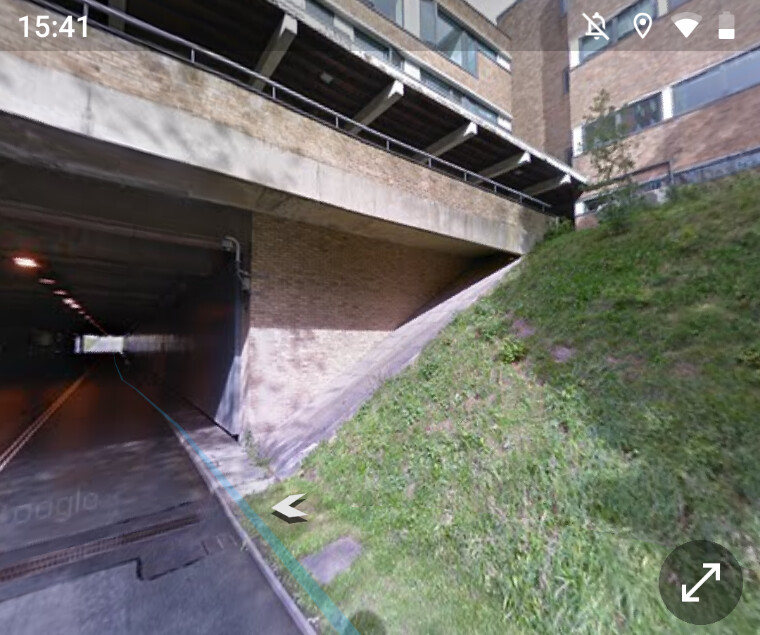
A lot of the good stuff has gone, there used to be loads little banks hidden between campus halls, the amount building that has taken place in the past 10 years is unreal, unfortunately it’s all generic boxxy studio flat looking shite you’ll find anywhere.
This. The texture of the city has changed dramatically in the last 25 years. Critics complained that the brutalist era led to an architectural sameness, and to be fair the prefabricated concrete technique and high rises probably did create this to a degree, but I think this problem has multiplied as speculative property developments have become the only recent building activity a lot of British cities have seen.
As this thread demonstrates, skateboarders are attuned to the subtle, small differences that a lot of brutalist buildings incorporated at a pedestrian level. It’s such a shame that architects aren’t embellishing buildings in the same way anymore. We are witnessing the death of the street bank.
I totally agree, also there a prohibitive cost to a lot of the street furniture we’d like to see, why spend the time and money making a rolling brick or flagged bank on the side of that building when you can tarmac the edge maybe put a wooden knee high fence and grass seed the rest.
I think a lot of it also comes down to the privatisation of public space. Obviously as skateboarders we’re all used to occupying public space in a way that we’re not supposed to, and often in places that are private - schools, unis etc.
But so much public space these days - plazas, parks, streets - isnt actually public at all, they’re privately owned places with by laws and rules and quite often the people who own them either don’t want you there unless you’re spending money.
A lot of modern architecture feels anti-people - you can see that in benches that people can’t lie down on, or in public plazas that have no benches at all or have gates that lock at 6. And skateboarding thrives on the kind of architecture that is lacking.
That brutalist dream of walk ways and open high rises might have in hindsight not worked out well in our dark British environment, but at least the intention of bringing people together within the space was there.
the bottom banks at Wolves Civic are pretty fucked now. It’s almost as if the banks have slightly subsided so there is a lip at the bottom. Add in the paving slabs being in a sorry state and an already hard to skate spot becomes a lot harder.
Iain Bordens book touches on a lot of this, I tried reading it when 15 but I didn’t appreciate the density of his research at the time, I got a bit lost when he was refrencing people dancing and the difficulty of analysing movent and style. I need to give it another go.
I don’t like how backstreets have been banned from modern high streets, no hiding places or short cuts stick to the cattle run thank you.
This webinar took place last week - the opening keynotes are worth a watch, cover quite a few of the points made above
Featuring
• Iain Borden : City for People and Skateboarding
• Kristin Ebeling : Skate Like a Girl!
• Gustav Svanborg-Edén : Skating & Urban Co-Design in Malmö, Sweden
• Mikko Kyrönviita : Activists and the Self-made City
99 Percent Invisible is an awesome podcast anyway, but I just remembered they did this great podcast A few years back. Well worth a listen The Pool and the Stream - 99% Invisible
“It’s a shame that skateboarding is illegal is so many places, because skaters have a unique appreciation for architecture. They recognize the quality of concrete, the grain of wood, and the incline of a structure. They understand the way a landscape flows. Skateboarding is a way of reinterpreting the built environment, and imagining alternative uses for architecture”