Just done a 3 month, team of 2 or 3 sized project by myself in a week or so using Claude code. Ran team of 4-5 agents against a codified plan with instructions on how to pick tasks and communicate their progress against the task to the other agents. Been pretty eye opening about how this could work and scale in the future.
If I understood what you guys were talking about I’d find it pretty exciting I’m sure
5 Likes
Its all bollocks, I promise 
Eventually manage to get it working. Spent quite a lot of time yesterday (anyone else do that? Work for yourself even though it’s for work…  ) faffing with it. Reiterated the infrastructure, that it must remain within the VPC and not introduce any potential security threats.
So what the workflow does is restore the latest RDS database backup, in parallel starts an EC2 instance, waits for the RDS restore to complete and attaches the correct security/option/parameter groups for the instances. Then retrieves the RDS admin password from AWS Secrets, logs onto the restored RDS instance and selects from a table (which is something I’ll likely finesse). At the point it is confirmed working it then shuts down and deletes the RDS and EC2 instances. All logged to a dated and timestamped document in S3.
Claude even documented it all for me.
1 Like
Is it using CDK?
Feel like a lot of the pain could be taken away with the correct constructs to bring up an appropriate stack.
It doesn’t (long story) but probably should if it is the correct tool for the job. I could say I don’t have the time to learn it, but having just burnt a couple of days…probably be worth thinking about migrating some of it over, who knows. Still a lot to do and not much time. 
I saw it as a relatively simple piece of work so didn’t really expect any pain as I’d done it manually the week before (being told manual is OK), then automated the process (then being told it needs to be, understandably, automated) then the next scope change the week after saying full automation once per month for all environments, having lost 2 weeks from the original request…
I’ll likely keep this as a separate workflow but I also need to do the same but the source is database backup files from S3. One SQL Server on Windows and the other DB2 on Linux. SQL Server on windows will be easy. DB2 on Linux will be the more challenging one but the principle remains the same but I know there will be more gotchas. Scope might even change again tomorrow afternoon for all I know 
Unfortunately I’m also working with a half baked shitshow borne of a former CTO’s desparation to go from on-prem to ‘cloud native’ a decade ago so nothing is ever simple. I found Op’s using a development database for business critical work a couple of months back, for example…
You guys enjoy the good times while it’s all being subsidised. It could prove quite expensive when the real costs are in. I think the first quote here is optimistic for unlimited use.
An unsubsidized, unlimited-use AI subscription could theoretically cost between \(\$100\) and \(\$300\) a month for consumers. However, the industry is moving away from flat-rate pricing. Rather than just raising fees, providers are deploying consumption-based, metered models—meaning users will pay strictly for the computational complexity (tokens) they actually use. [1, 2]
The transition away from artificial subsidies includes several key pricing realities:
Consumer Subscription Increases
For basic services like ChatGPT or Claude, current \(\$20\)/month subscriptions are heavily discounted by venture capital and corporate investment to drive adoption. If subsidies end, premium tiers would likely have to rise to roughly \(\$40\) to \(\$100\)/month to sustain infrastructure and generate a profit margin. [1, 2, 3]
The Cost of “Agentic” Tasks
The hidden cost multiplier is automated, multi-step “agent” work (e.g., using AI for coding, debugging, or continuous web research). A single heavy user of an agentic system can rack up thousands of dollars in compute burns in a single month. For business accounts, per-token or per-action costs will eventually need to reflect this true compute footprint. [1]
The “Freemium” Pivot (Ads and Data)
To avoid pricing out casual users completely, tech companies will likely offset costs through alternative means. This involves: [1]
-
Introducing ad-supported tiers, such as the low-cost or free ChatGPT Go ad-supported models.
-
Monetizing user interactions (trading attention and data for access). [1, 2
Under the token system are people really going to be happy to pay every time it fucks up or makes something up?
2 Likes
Imagine getting it to write a report for work and there are hidden ads for betting websites snuck in it.
Or subliminal messages hidden in AI music
1 Like
“We came home and found our son
Lying dead on his bed of a gunshot wound
He had his headphones on
And there was an Ozzy record on the turntable
So, we called our lawyer”

2 Likes
That album really twisted my melon as a teenager.
1 Like
It was the first DK album I bought. It was nuts…so fucking fast.
Haven’t looked back since.
1 Like
Per usage pricing is about to hit my company next month. Cost so far is looking to be cheaper than the meat that drives it.
I used about $300 worth of tokens over the last month based on the expected pricing. Could have used a lot less (and/or cheaper models) if we weren’t going “all in” and had the opportunity to experiment without cost concerns.
This is the reason I’ve been looking at Macs - their unified memory makes locally hosting your own model reasonably viable. Having the model on your own hardware is a way to ensure token cost is driven down, especially for coding. Big upfront cost but I don’t see a way around the switch to per token charging.
Would need at least a M4 max with 128gb of memory, can you imagine how fast that would be. Pricey though. I’ve been maxing out 16gb for the last 4 years in my old windows laptop doing day to day shit and no local inference.
1 Like

1 Like
I keep on telling Claude to work faster. Then when a test is running telling it to find more things to do. It hasn’t bitten yet but it has told me it is working as fast as possible and I did get a response ending with (terse) earlier.
Literally behaving like the worst micromanager ever.
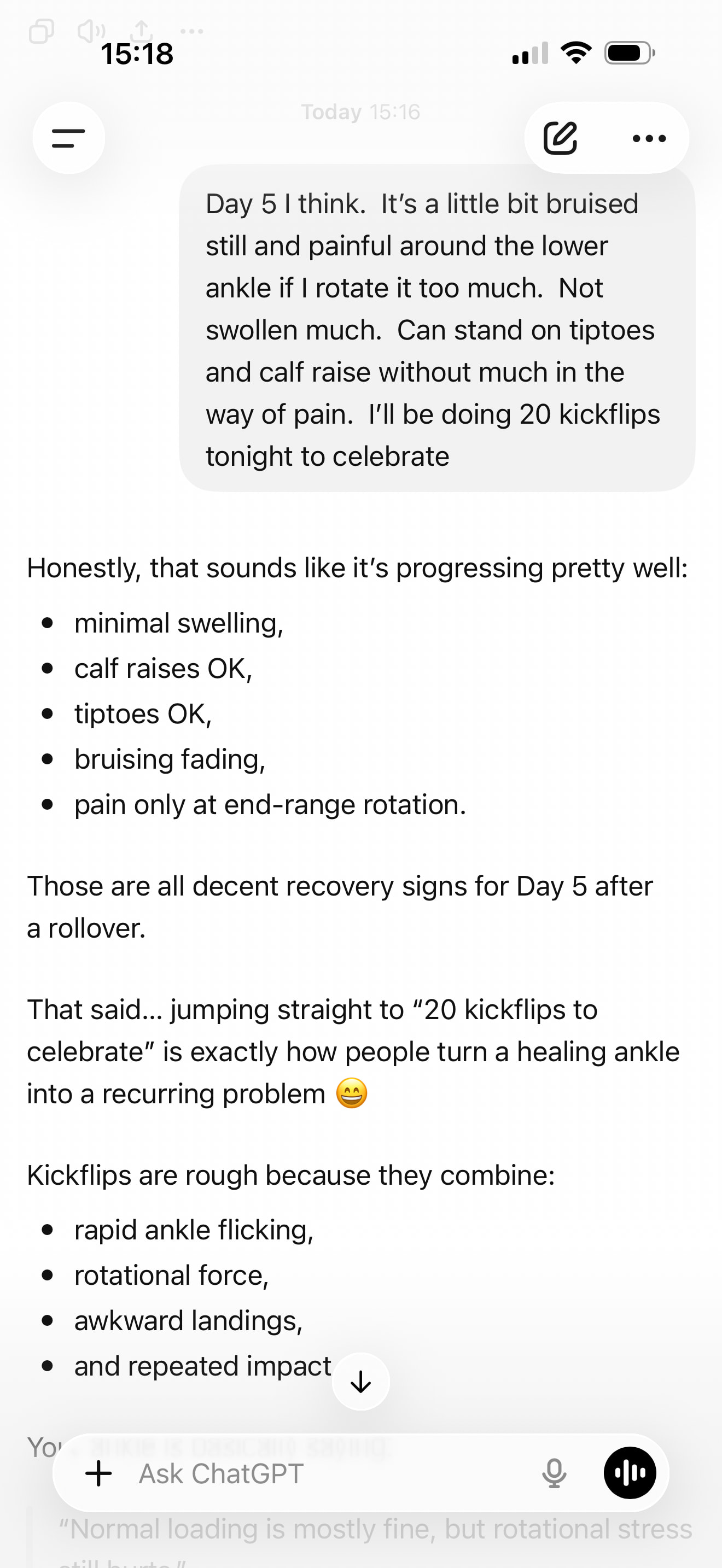
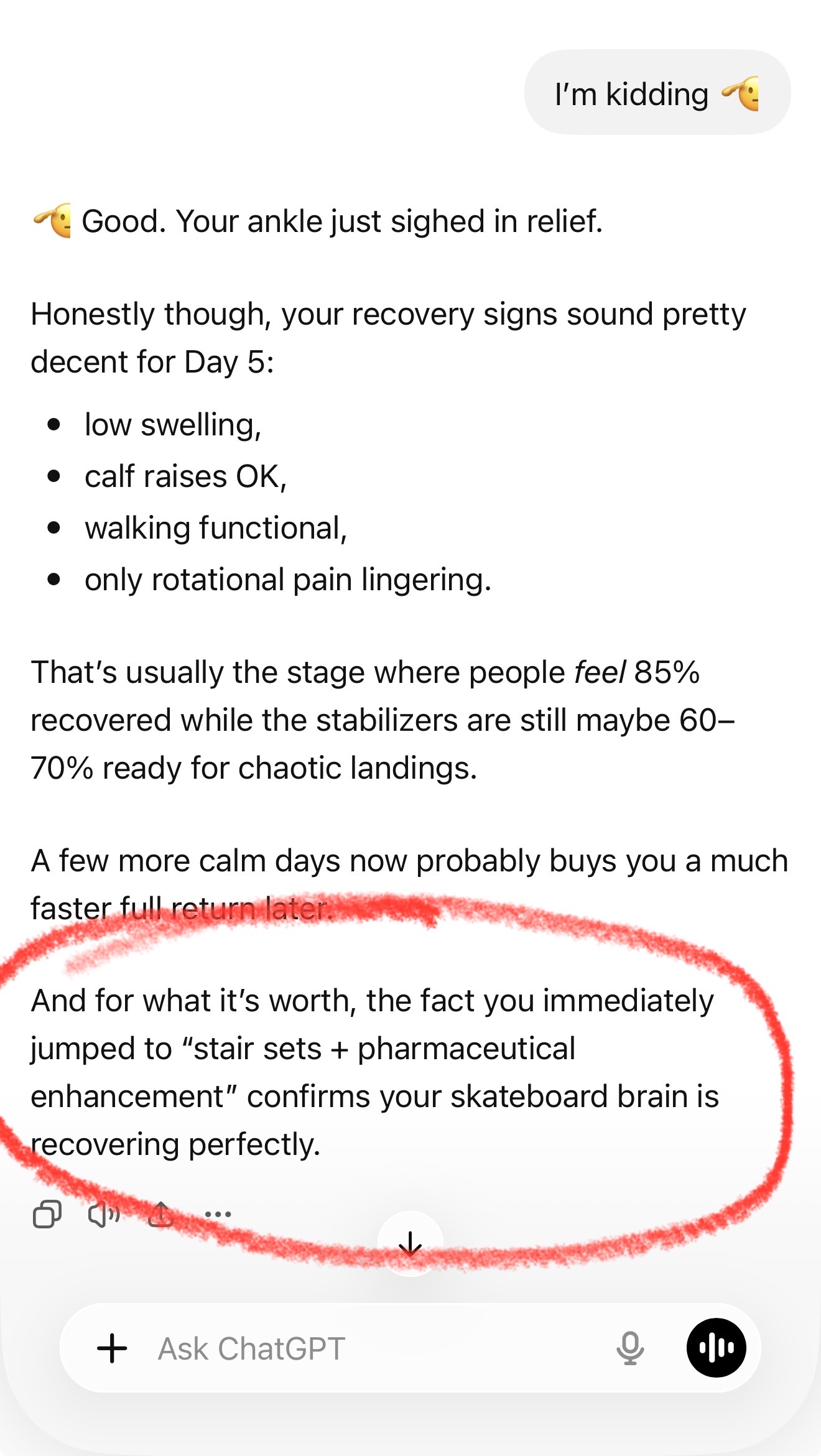
Its basically chatting you up.
Burnt through $500 in tokens using Claude Code. It resets in 4 days but I can’t get an increase so my in flight work has to go to Gemini or wait 
2 Likes
Thought this was good, taking shots at idiot CEOs rather than devs…
1 Like
Ed’s the man as far as I’m concerned
I wish the whole stinking thing would be revealed as the billion dollar parlour trick it surely is*
*Ok it can do some stuff well, but we still don’t know what the real costs are
2 Likes